 Billericay Electrical Services
Guide
What do EICR codes C1, C2, C3 and FI mean?
C1 means danger is present, C2 means potentially dangerous, FI means further investigation is needed and C3 means improvement is recommended.
- Send a short enquiry
- Covering Essex
- EICR and related services
On an EICR, C1 means danger is present and immediate action is required, C2 means the problem is potentially dangerous and needs urgent remedial work, and FI means further investigation is required without delay. C3 means improvement is recommended but nothing is dangerous. A report containing any C1, C2 or FI is classed as unsatisfactory, while a C3 on its own does not make it so.
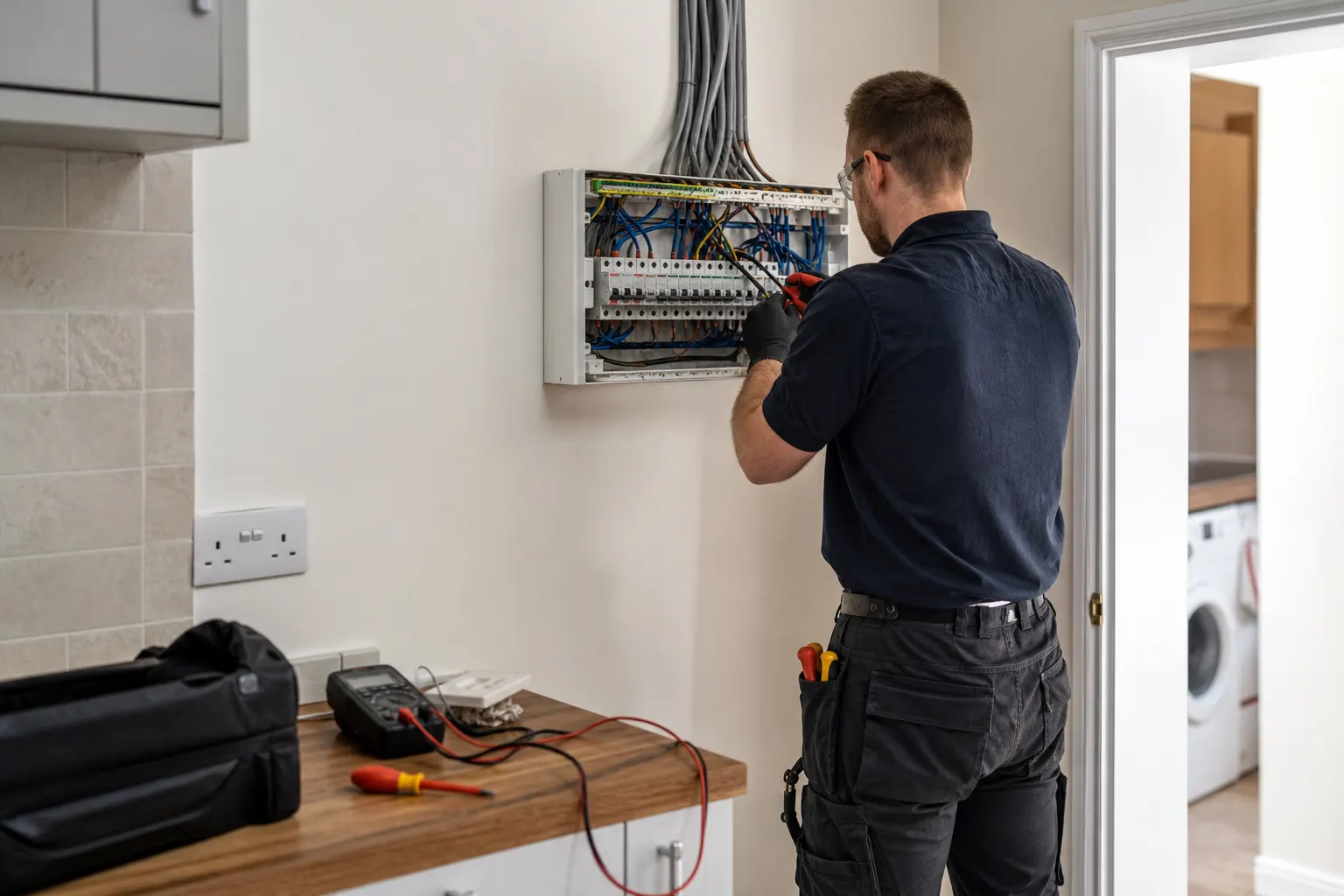
What the codes are for
An EICR (electrical installation condition report) records the results of inspection and testing on the fixed wiring and equipment in a property. Where the inspector finds something that does not meet current safety standards, or that has deteriorated, they record an observation and give it a fault code. The code tells you how serious the issue is and how quickly it needs attention.
The codes are a ranking, not a score. A report can list several C3 items and still be satisfactory, while a single C2 is enough to make the whole electrical installation condition report unsatisfactory.
C1 and C2: the codes that need action
C1 means danger is present and there is a risk of injury. Typical examples are exposed live conductors that someone could touch, or a damaged accessory with live parts showing. The inspector will usually advise making the problem safe straight away, sometimes before they leave.
C2 means potentially dangerous. Nothing may have gone wrong yet, but a fault elsewhere, or a particular situation, could create a real risk. Examples include a missing or inadequate earthing or bonding connection, signs of overheating at a connection, a cracked consumer unit enclosure, or a circuit lacking the protection it should have. Urgent remedial work is required, which means you should not leave it for a rainy day.
If your condition report EICR shows either code, ask the inspector to point out exactly where each item is and what has to be done to clear it.
FI: further investigation required
FI does not mean something is definitely wrong. It means the inspector could not fully assess part of the installation and has found something that could be dangerous once it is looked at properly. Examples include a circuit that cannot be traced, a reading that looks odd, such as unexpectedly high resistance, or wiring hidden behind fixed fittings.
Because the risk is unknown, FI is treated seriously and also makes the report unsatisfactory. The next step is a targeted investigation, which may involve extra testing or opening up access. The outcome is then either a more specific code, such as a C2, or confirmation that the circuit is fine. Ask whether the investigation can be done as an addition to the original visit or needs to be booked separately.
C3: improvement recommended
C3 is advice. The installation is not dangerous, but it falls short of what would be expected on a newly installed system. Common examples are older wiring without additional protection that modern installations have, or labelling that is missing or unclear.
You do not have to act on a C3 for the report to be satisfactory, but they are worth reading. If you are planning a kitchen refit, a rewire of one area or a consumer unit change, that is a sensible moment to deal with C3 items. Keep them in mind too if you are buying or selling, as they show where the installation is ageing.
What to do after an unsatisfactory report
First, read the observations and make sure you understand each one. Then ask for a written quote for the remedial work. Cost depends on how many circuits are affected, how easy the wiring is to reach, the parts needed, how long the work takes and whether the job can be done in one visit. Quotes from different electricians are only comparable if they cover the same list of observations.
Once the work is finished, the installation should be retested where needed and the report updated or a confirmation issued, so you have paperwork showing the C1, C2 and FI items were cleared.
Landlords and letting agents should be aware that rules on how long an unsatisfactory report can stand, and who must receive copies, can change. Check GOV.UK for the current position rather than relying on older advice.
Billericay Electrical Services covers Billericay and the wider Essex area for EICR work and the remedial jobs that can follow.
Common questions
Does a C3 mean my EICR has failed?
No. A C3 is a recommendation for improvement. A report with only C3 observations can still be satisfactory. It becomes unsatisfactory only when there is a C1, a C2 or an FI.
How quickly must a C2 be fixed?
C2 requires urgent remedial action. The report does not give a fixed deadline for everyone, so ask your inspector how soon they advise. As a rule, treat it as a priority and get a written quote promptly.
Is an FI the same as a fail?
An FI makes the report unsatisfactory, but it does not confirm a fault. It means part of the installation could not be fully assessed and needs further investigation. The result of that investigation decides what, if anything, must be repaired.
Do letting agents need to see the codes?
Landlords and letting agents usually need the full report, not just a pass or fail. The exact duties depend on current rules, which can change, so check GOV.UK for the up to date position.