 Billericay Electrical Services
Guide
How much does an EICR cost?
EICR costs depend on property size, number of circuits, age and access. Here is how pricing works and what to ask for in a written quote.
- Send a short enquiry
- Covering Essex
- EICR and related services
The cost of an EICR depends mainly on the size of the property, the number of circuits and the age and condition of the electrical installation, so there is no single price that fits every home. The reliable answer is a written quote based on your actual property. Below we explain how electricians build that quote and what to check before you accept it.
Indicative eicr prices
Typical ranges, so you can sanity check a quote.
| Size or type | Indicative range |
|---|---|
| Electrical Installation Condition Report (EICR) | £120 to £250+ |
These are indicative ranges, not quotations, and nobody is bound by them. Scope, access and specification all move the price.
What an EICR is and why the price varies
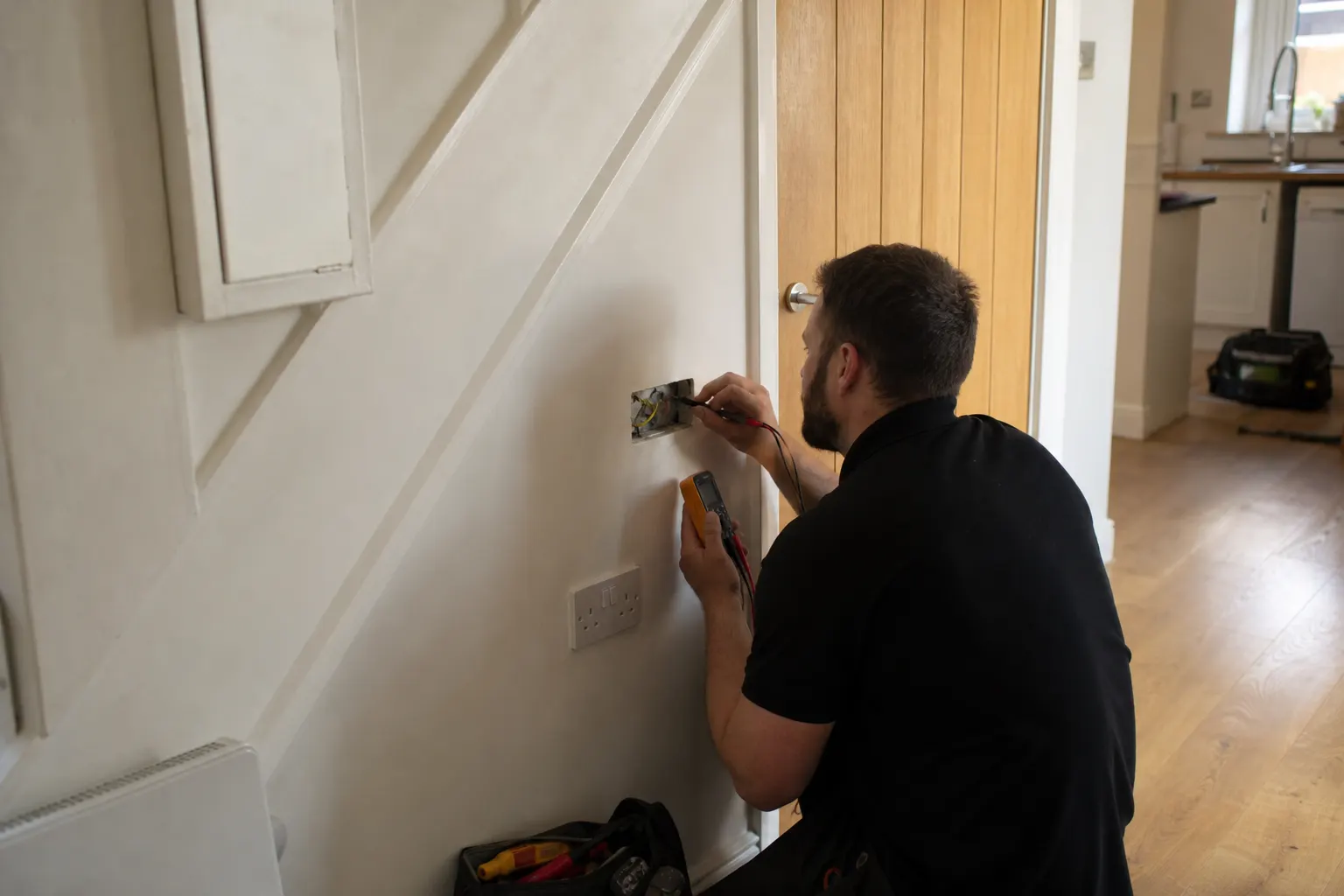
An EICR is an Electrical Installation Condition Report. An electrician inspects and tests the fixed wiring and equipment in your property, then records the electrical installation condition and any faults found. It is a report on safety, not a repair job.
Because every property is different, the work involved is different too. A small flat with a handful of circuits is quicker to inspect than a large family house with extensions, outbuildings and several consumer units. That difference in time and effort is the main reason quotes vary from one property to the next.
How electricians usually structure the price
Most EICR quotes are given in one of a few ways. Some electricians offer a fixed price for the inspection and report, which is easy to compare. Others work from an hourly rate plus the time they expect to spend. Some add a separate callout fee or charge for the written report.
Whichever method is used, ask what the quote covers. A good written quote should say whether it includes the inspection, the testing, the report itself and any follow-up questions you have afterwards. If a quote is vague, ask for it to be itemised so you can compare like with like.
What moves the cost up or down
Several practical factors affect the price:
Property size and number of circuits: more rooms and more circuits mean more testing points and more time.
Age and condition: larger or older properties often take longer, especially where the wiring has been altered over the years or records are missing.
Access: if the consumer unit, loft, under-floor areas or sockets are blocked by furniture or stored items, the electrician needs more time. Clearing access beforehand can help.
Number of consumer units and outbuildings: garages, sheds, garden supplies and separate boards all need to be inspected.
Time of day: work requested outside normal working hours may be priced differently, so mention any timing needs when you ask for a quote.
Power isolation: the supply has to be switched off for parts of the testing. If that is difficult in your home, tell the electrician in advance.
Remedial work is separate from the report
The report tells you what condition the installation is in. If the electrician records something potentially dangerous or in need of improvement, any fixing is remedial work and is normally quoted separately. Parts, labour and extra visits all affect that second cost.
It helps to ask at the outset how remedial work will be handled. Some customers prefer to receive the report first and then decide who carries out any repairs. Others ask the same electrician to quote for the fixes once the findings are known. Either is reasonable, as long as you get the figures in writing before work starts.
How long it takes and what to prepare
Time is a large part of the cost. A typical home is often a matter of hours rather than days, but larger or older properties can take noticeably longer. The electrician will need access to every circuit, and the power will be off for periods during the visit.
To keep things efficient, tell the electrician about any extensions, rewires or additions, make sure rooms and the consumer unit can be reached, and share any earlier electrical certificates or reports you have. The less time spent hunting for access or information, the more smoothly the inspection goes.
Choosing who to ask for a quote
An EICR should be carried out by a competent electrician with experience of inspection and testing, not just general electrical work. It is sensible to ask about their experience with condition reports and to ask what the report will include. Be cautious about anything that sounds too vague or an offer that does not mention a written report.
Rules on when an EICR is needed, such as for rented homes, where checks are commonly recommended at least every five years, can change. Check GOV.UK for the current position, and ask your landlord, agent or solicitor if you are renting or selling.
Billericay Electrical Services provides EICRs and serves Billericay and the surrounding parts of Essex. If you would like a quote, use the enquiry form and tell us about the property size, its age and any areas that are hard to reach.
Common questions
Can a normal electrician do an EICR?
Inspection and testing is a specialist part of electrical work. Choose an electrician who is experienced in producing condition reports, and ask what the report will cover before you book.
How long does an EICR test take?
It depends on the property. A smaller home is often done in a few hours, while larger or older properties with more circuits can take longer. The electrician can give you a realistic estimate once they know the details.
Does the quote include repairs?
Usually not. The EICR reports on the condition of the installation, and any remedial work is normally quoted separately. Ask for both in writing so you know what you are agreeing to.
Can I sell my house without an electrical safety certificate?
There is generally no rule that stops a sale for lack of one, but buyers or their solicitors may ask for a recent report. Check GOV.UK and speak to your solicitor for the current position.