 Billericay Electrical Services
Guide
What affects the cost of an EICR in Billericay?
The cost of an EICR depends on property size, number of circuits, access and condition. Here is how pricing works and what to ask before booking.
- Send a short enquiry
- Covering Essex
- EICR and related services
The cost of an EICR in Billericay mainly depends on the size of the property, the number of circuits that need testing, and how easy the wiring is to reach. Some electricians quote a fixed price and others charge for time, so the safest step is to ask for a written quote that says exactly what is included.
Indicative eicr prices
Typical ranges, so you can sanity check a quote.
| Size or type | Indicative range |
|---|---|
| Electrical Installation Condition Report (EICR) | £120 to £250+ |
These are indicative ranges, not quotations, and nobody is bound by them. Scope, access and specification all move the price.
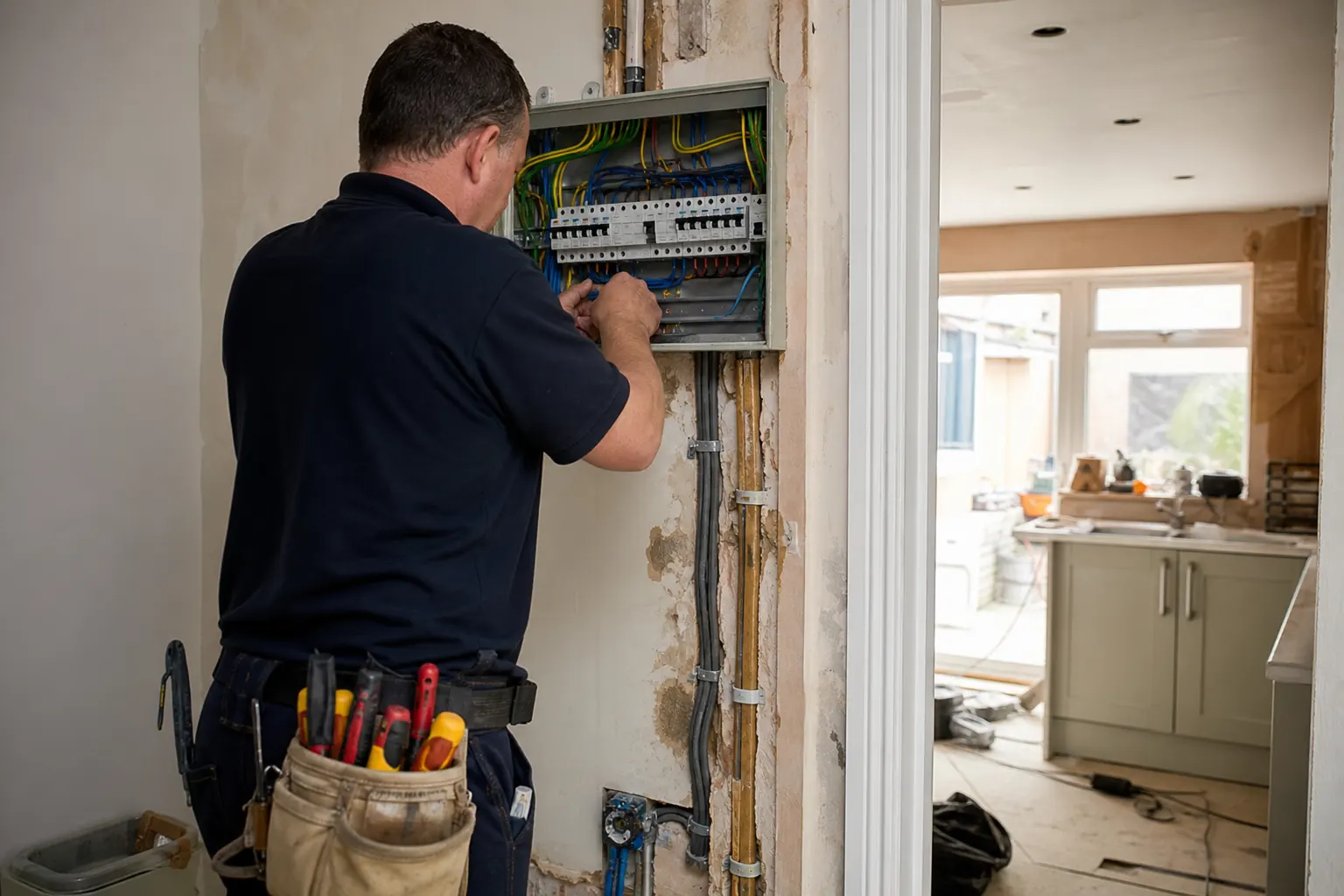
How EICR pricing usually works
An EICR (electrical installation condition report) is an inspection and testing job, so most quotes are built from the time it will take. That time can be presented in different ways: a fixed price for the whole report, an hourly rate, or a callout fee plus time on site. None of these is automatically better. What matters is that you know which one you are being offered.
A fixed price gives certainty if the scope is clearly written down. An hourly rate can suit unusual properties, but you should ask for an estimate of the hours so there are no surprises. If a callout fee applies, ask whether it is part of the total or added on top.
Property size and number of circuits
The biggest factor is how much there is to test. Each circuit in the electrical installation, such as lighting, sockets, a cooker or a shower, needs to be inspected and tested. A small flat with a handful of circuits takes less time than a large family house with extensions, outbuildings or several consumer units.
The number of rooms, sockets and light fittings matters too, because a sample of them is checked. Before you ask for a quote, count your consumer units and note any garage, garden office or loft conversion with its own supply. Telling the electrician about these up front means a more accurate quote.
Access and the state of the wiring
Access can add real time to an inspection. Furniture against sockets, fixed floors, locked rooms, a consumer unit hidden behind stored items or a loft that is hard to reach all slow the work. Clearing the way beforehand can help keep the job straightforward.
The age and condition of the wiring also play a part. Older installations, or ones that have been altered several times by different people, can take longer to trace and test. Missing labels on the consumer unit or no records of earlier work make it harder to understand what each circuit does. Previous certificates or condition reports are worth finding and showing to the electrician.
Remedial work is a separate matter
An EICR records the condition of the installation. It does not fix problems. If the report finds faults and the EICR is unsatisfactory, remedial work will be needed, and that is normally priced separately from the inspection.
This is why a quote for the report alone cannot tell you the final bill if issues turn up. Ask how remedial work would be handled: whether you get a separate written quote for each repair, and whether you are free to decide what to go ahead with. Parts, such as a replacement consumer unit or new protective devices, will affect that cost, but they only come into it if the inspection shows they are needed.
Landlords, sellers and practical timing
Landlords often need a condition report for a rented property, and the rules for how often and what must be done can change, so check GOV.UK for the current position. If you have tenants, tell the electrician, because the power will be off for parts of the visit and access needs arranging. Several visits or awkward appointment times can affect the price.
If you are selling, there is generally no rule that you must hold an EICR, but a buyer or their solicitor may ask for one. Your solicitor can advise on what is expected. Booking at an unusual time of day, or asking for a very quick turnaround, may also change a quote, so allow some flexibility if you can.
Questions to ask before you accept a quote
Compare quotes on what they include, not just the headline figure. Useful questions are: Is the price fixed or based on time? Does it cover every circuit and every consumer unit? Is a callout fee included? How long will the inspection take? Will I receive the full report and certificate afterwards? What happens if remedial work is needed?
Ask the electrician to put the answers in writing. It is also reasonable to ask about their qualifications and registration, and to see proof, as the person signing the report is responsible for its findings.
Common questions
What does an EICR certificate cost?
There is no single figure that fits every home. The cost depends on property size, the number of circuits, access and the condition of the wiring. Ask for a written quote that sets out what is covered.
Is a callout fee the same as the EICR price?
Not necessarily. A callout fee is a charge for attending, and it may or may not be included in a fixed price. Ask whether it is part of the total or added separately.
Can I sell my house without an electrical installation certificate?
Generally there is no rule that you must have an EICR to sell, but buyers may ask for one. Speak to your solicitor, and check GOV.UK for the current position.
How often do landlords need an EICR?
The report itself recommends when the next inspection is due, based on the installation's condition. Rules for rented property can change, so landlords should check GOV.UK for current requirements.