 Billericay Electrical Services
Guide
How Long an EICR Takes and What Is Involved
A typical EICR on an average home takes a few hours. Here is what the inspection involves, what slows it down and what happens afterwards.
- Send a short enquiry
- Covering Essex
- EICR and related services
An EICR on a typical home usually takes a few hours, while a larger property or one with many circuits can take most of a day. The exact time depends on the size of the installation, how easy the wiring is to reach and what the tests turn up. Below is what happens on the day and how to help it run smoothly.
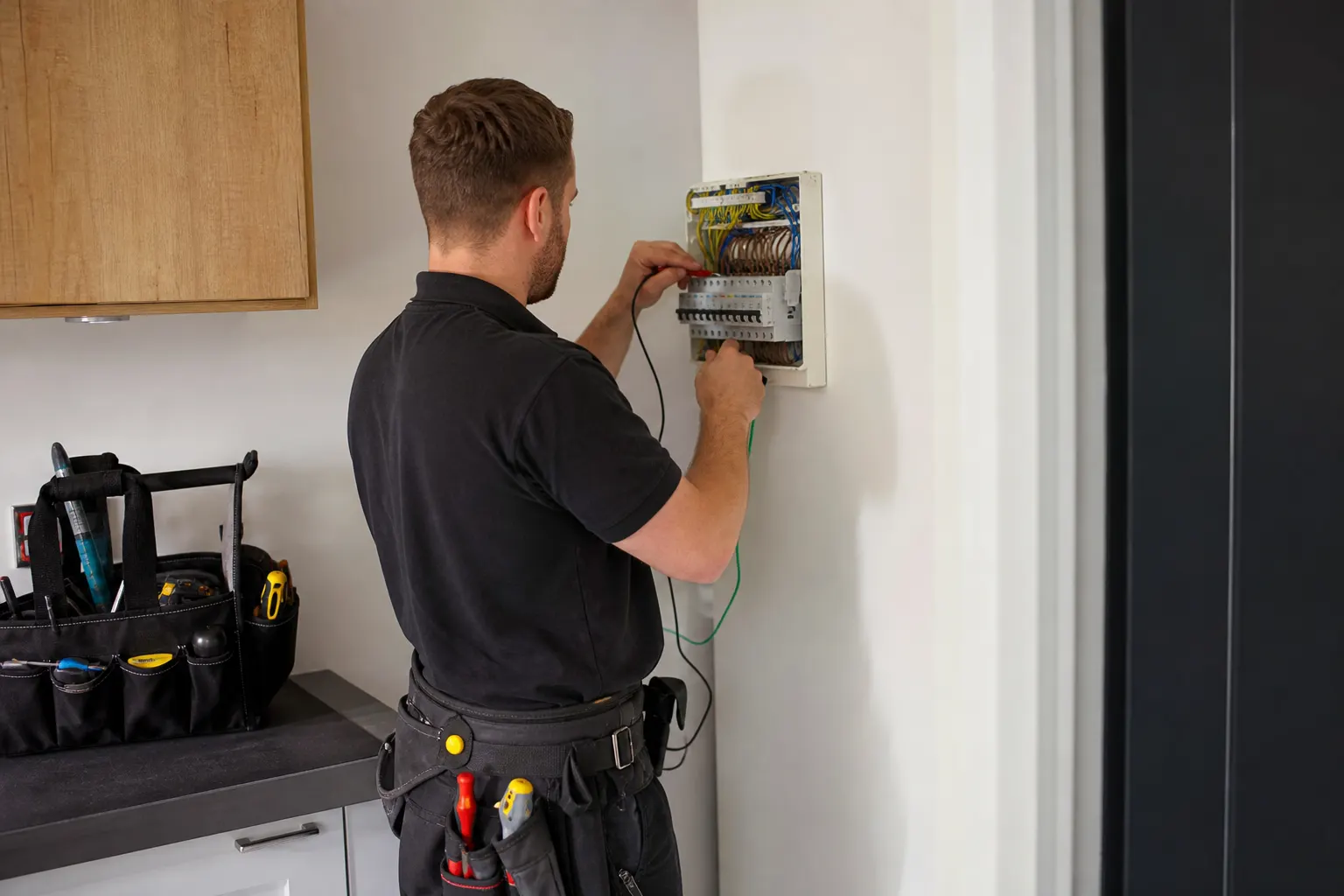
What an EICR is
EICR stands for Electrical Installation Condition Report. It is a formal inspection of the fixed electrical wiring and equipment in a property: the consumer unit (fuse board), circuits, sockets, switches, lighting and earthing and bonding.
The aim is to find out whether the installation is safe to keep using and whether anything is damaged, worn out or not up to current standards. It is not the same as PAT testing, which covers portable appliances such as kettles and lamps.
How long it usually takes
For a typical flat, expect a shorter visit. For a 3-bedroom house, allow a few hours, and it can run towards half a day or longer if the property has several consumer units, extensions or outbuildings. Commercial premises vary widely, because the number of circuits and the layout drive the time.
The inspector can give you a realistic estimate once they know the property size, the number of circuits and whether they can get to everything. Treat any estimate as a guide, since faults found on the day can add time.
What happens on the day
The inspector starts with a visual check of the consumer unit and a sample of accessories, looking for damage, overheating, missing covers and unsuitable repairs. They also check that circuits are identified.
Next come the tests. Some are done with the power off, which checks the continuity of the wiring and its insulation. Others are done with the supply on, which checks things like earth fault loop impedance and the operation of RCDs. You can expect the power to be switched off in sections or for a period, so plan around computers, freezers and anything else that needs to stay on.
The inspector records each circuit and any observations as they go. The written report follows once the results are written up.
What can make it take longer
Access is the biggest factor. Locked rooms, loft hatches blocked by boxes, furniture in front of sockets and a consumer unit hidden behind clutter all add time. Tenants not being home can stop the inspector reaching rooms at all.
Other common causes:
- Circuits that are not labelled, which means tracing each one - Older wiring or a mix of old and new work - Extensions, garages, sheds or garden supplies - Faults that need investigating before testing can continue
The same factors affect the cost. Pricing for inspections is usually based on the size of the property, the number of circuits and the time needed, and sometimes the time of day or access difficulties. Ask for a written quote that says exactly what is included, and whether any extra visits or remedial work would be priced separately.
The report and what happens if it fails
The report gives an overall result of satisfactory or unsatisfactory. Issues are coded: C1 means danger is present, C2 means potentially dangerous, C3 means improvement is recommended, and FI means further investigation is needed. A C1, C2 or FI usually results in an unsatisfactory report.
An unsatisfactory result is not the end of the road. It means remedial work is needed, and once that is done the issues can be re-checked and the report updated. Landlords in particular should act promptly, and rules for rented homes can change, so check GOV.UK for the current position.
How long an EICR lasts and how to prepare
An EICR does not expire on a fixed date for every property. The inspector recommends when the next inspection is due, based on the condition of the installation and how the property is used. Rented homes and commercial premises are often inspected more regularly than owner-occupied homes, and an installation in poor condition may need a shorter interval.
To help the visit go quickly, clear access to the consumer unit and main rooms, tell occupants about the power being off, and share any previous reports or records of recent electrical work. Billericay Electrical Services covers Billericay and the wider Essex area for EICRs, and the enquiry form is the way to ask about your property.
Common questions
What does EICR stand for?
EICR stands for Electrical Installation Condition Report. It is a record of the condition of the fixed wiring and associated equipment in a property, including any faults or safety concerns found during testing.
How long does an EICR check take for a 3-bedroom house?
Usually a few hours, and sometimes longer if there are several consumer units, outbuildings or access problems. The inspector can give a better estimate once they know the layout and number of circuits.
How often should an EICR be done?
The report itself states a recommended date for the next inspection. Rented properties and commercial premises tend to need them more regularly, so landlords should check GOV.UK for the current rules.
What happens if you fail an EICR?
Remedial work is needed to deal with the items coded C1, C2 or FI. Once the work is done, the installation can be re-checked and the report updated to show it is satisfactory.